
Ayla Oasis Launches 2025 Sustainability Report and Zero Plastic Drive in Aqaba
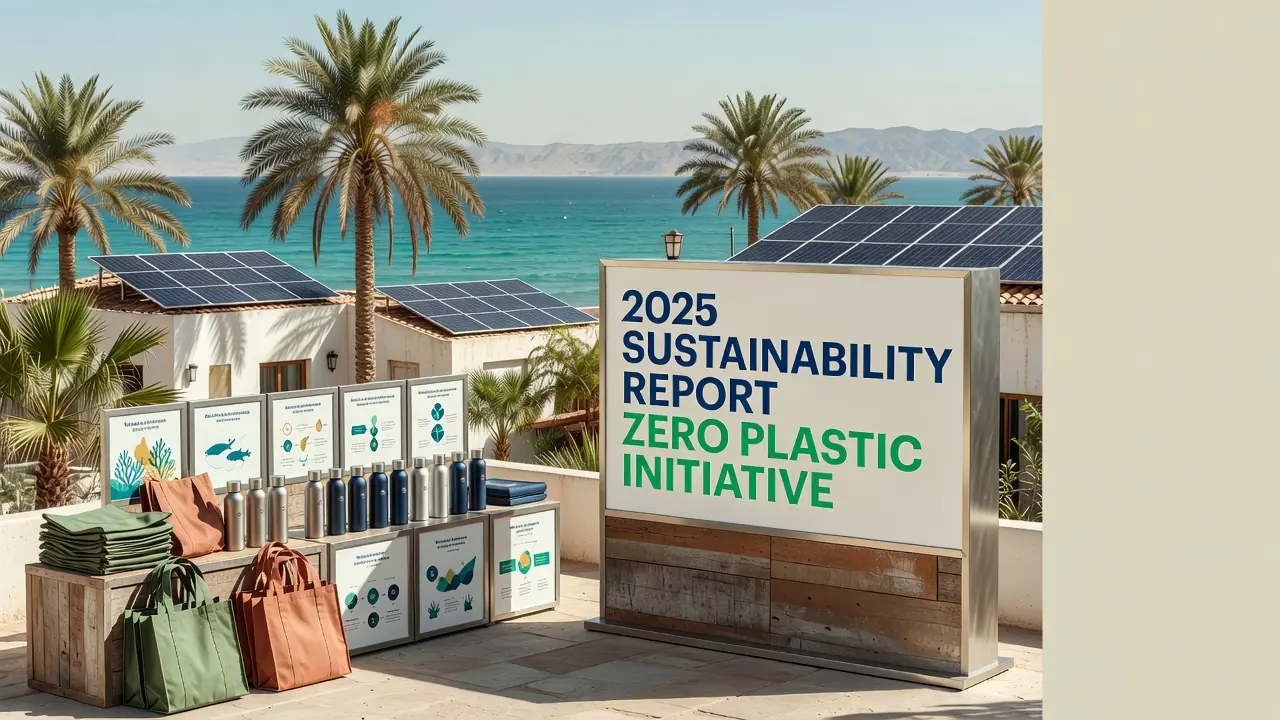
The Ayla Oasis Development Company (AODC) has released its 2025 sustainability report and a new "Zero Plastic" initiative in Aqaba, Jordan's only coastal city. The launch took place during Ayla Sustainability Day 2026, where officials reviewed past results and discussed priorities for the next phase of work.
What the report covers
The report documents the company's performance in environmental, social and corporate governance areas. According to Ayla, it tracks efforts in managing resources, improving operational efficiency, protecting the environment and supporting the local community. Partners and stakeholders can use the document to follow results and measure progress toward the company's long-term goals.
Ayla also reviewed projects in renewable energy, energy efficiency, waste management and biodiversity protection. Among them is investment in photovoltaic solar energy systems, along with other consumption-saving solutions. Managing Director Sahl Dudin said the report helps the company identify areas that still need work, not only highlight successes.
How the Zero Plastic initiative is meant to work
The Zero Plastic initiative aims to cut the use of single-use plastics in Ayla's operations and activities. It also encourages employees and other stakeholders to switch to reusable alternatives. The announcement did not include published targets, timelines or quantities, so the scale of the reduction remains unclear.
Officials framed the effort as part of a broader goal. Environment Commissioner Nedal Ouran of the Aqaba Special Economic Zone Authority (ASEZA) said protecting Aqaba's environment is a shared responsibility involving official bodies, the private sector and the local community. He praised private initiatives that turn environmental awareness into daily habits meant to protect the city and its marine environment.
Why it matters for households and visitors
For residents, the practical lesson is that reusable habits matter most when they become routine: carrying a bottle, bringing a cloth bag, or choosing refillable containers. Single-use plastic is a common source of waste in coastal areas, where litter can reach the sea. Initiatives like this one show how a large employer or facility operator can set its own standards, but individual choices still add up.
Visitors to Aqaba who are planning a trip may notice these changes in how businesses handle packaging and waste. Anyone looking for details about specific facilities should check directly with the operator, since this report does not provide information about opening hours, pricing or visitor services.
Limits of the announcement
The report and initiative were presented at a launch event, and the public materials describe goals and ongoing projects rather than completed, independently verified results. Readers who want to assess progress should look for the report's specific figures on energy use, waste and emissions, and compare them across future reporting years. Until then, the Zero Plastic initiative is best understood as a stated commitment whose outcomes have yet to be measured.