
Trinidad's 2018 Flood Disaster Becomes a Case Study in Plastic-Driven Climate Risk
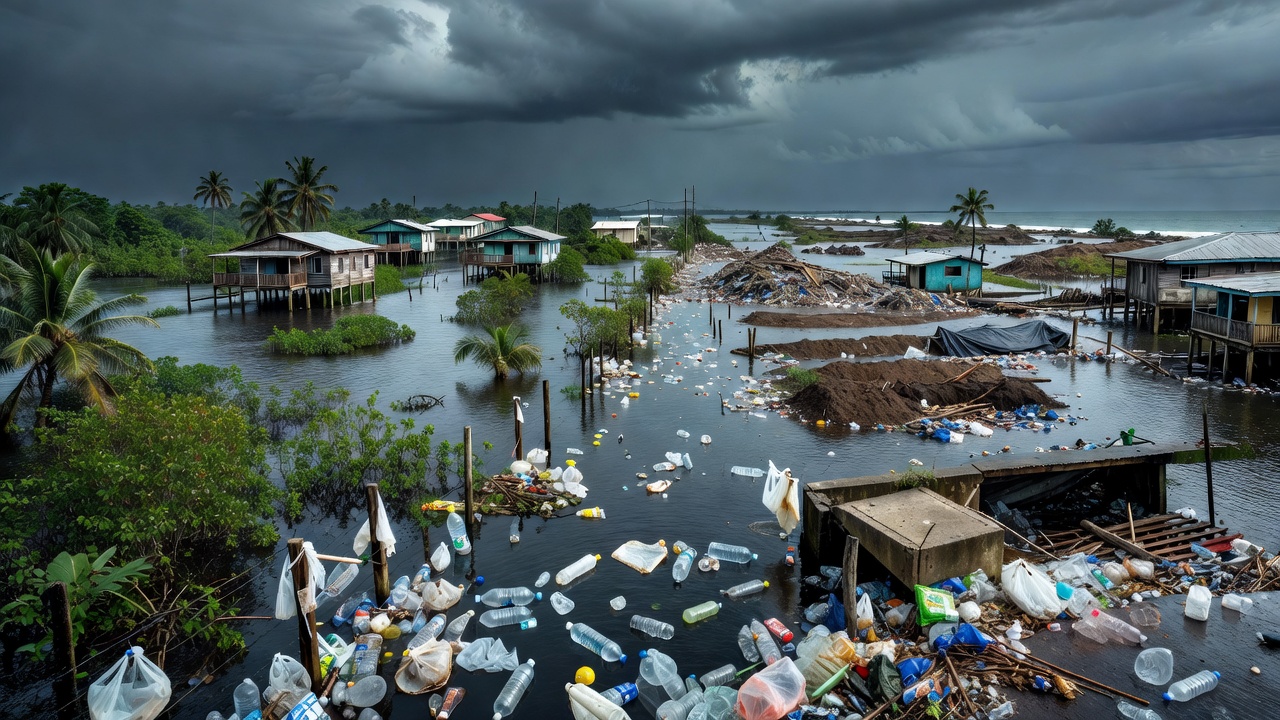
A new international report uses Trinidad and Tobago's devastating October 2018 floods to show how plastic pollution can intensify the damage from extreme weather. The findings arrive as small island nations press for greater financial support and coordinated action at the COP31 climate summit in Antalya, Türkiye.
How plastic waste worsens flood damage
The report, The Plastic-Climate Nexus for SIDS, was convened by the environmental organisation Common Seas. It identifies Trinidad's flooding as an example of how plastic waste can compound climate-related risks, overwhelm drainage systems and weaken waste management, leaving island communities more vulnerable.
Ronald Roach, former chief executive officer of the T&T Solid Waste Management Company Ltd., provided testimony for the report. He described the operational strain after two days of heavy rainfall in October 2018 inundated communities, damaged homes and infrastructure, and affected thousands of people. According to the report, about 80 per cent of Trinidad was affected.
Waste management under pressure
The volume of waste generated during and after the floods forced the temporary closure of the Guanapo Landfill and the creation of alternative disposal sites so that collection could continue. Plastic bottles and other discarded materials also blocked drains, culverts and waterways, adding to the flooding problem.
Roach, now director of Climate Resilience, Environment, Water and Waste at Unite Caribbean Group, contributed the Trinidad case study. It supports the argument that waste management should be built into climate adaptation and disaster preparedness rather than handled as a separate issue.
A wider risk for small island states
The report warns that similar vulnerabilities exist across Small Island Developing States, where rising seas, stronger storms and coastal erosion threaten infrastructure. Plastic pollution also harms reefs, fisheries and tourism-dependent economies.
Although SIDS contribute less than one per cent of global greenhouse gas emissions, the report estimates they need about US$12 billion a year for climate adaptation but received only US$2 billion annually in international public adaptation finance in 2021-2022. Plastics account for an estimated four to five per cent of global greenhouse gas emissions, and without intervention, emissions across the plastics life cycle are projected to rise from 1.8 billion to 2.8 billion tonnes of carbon dioxide equivalent by 2040.
What island nations are asking for
- Formal recognition of the combined plastic and climate risks in international agreements.
- Accessible grant-based financing for coordinated responses.
- Research led by SIDS themselves.
- Coordination between existing climate funds, including the Green Climate Fund and Global Environment Facility, and financing under a future global plastics treaty, without adding to island states' debt.
For Trinidad and Tobago, the report puts renewed attention on drainage maintenance, waste disposal infrastructure and the funding needed to protect communities from future flooding. The report's estimates are its own, and how these proposals will be taken up at COP31 remains to be seen.